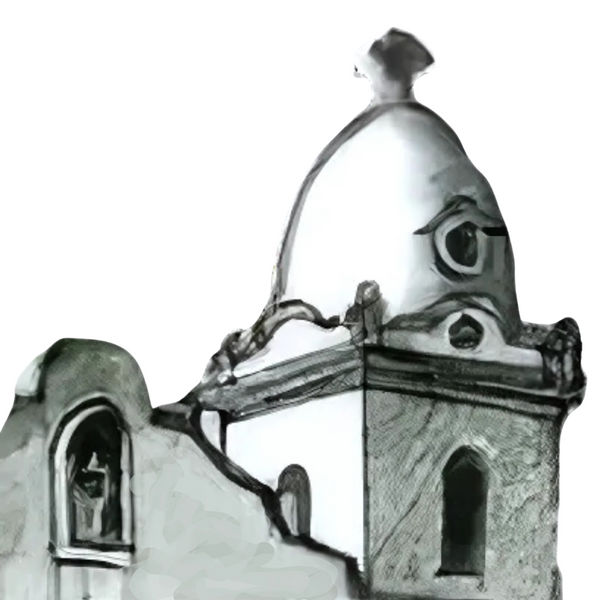
Tigua Indians & Historic El Paso Mission Trail
La Misión de San Antonio de Ysleta del Sur, established in 1680, owes its heritage to Pueblo traditions, Franciscan Missionaries and Spanish Colonial life in Northern New Mexico. This and the other three missions established here after the Pueblo Revolt of 1680 are children of the pain of intolerance between cultures and forced emigration. Though in the present State of Texas, this mission’s life and identity is knitted integrally to the Missions of the Kingdom of St. Francis – present day New Mexico.
Ysleta Mission, along with the others, was established by Antonio de Otermín and Fray Francisco de Ayeta in 1680. Spaniards and Native Americans arrived here, then south of the Rio Bravo, in October 1680. They had fled or were forced to accompany the refugees of the Pueblo Revolt in Northern New Mexico.
An earlier mission had been established in the region, in what is now central Juárez. By 1659 Fray García had established a Mission to the Piro Indians who had moved into the Pass. This Mission, Nuestra Señora de Guadalupe, is today the side chapel to the cathedral church in la Ciudad Juárez, Chih., Mexico.
The current site of Ysleta mission was first used as a refugee camp in 1675 for Pueblo Indians who were escaping Apache raiders.Then, six years later, the people fleeing Pope’s revolt in New Mexico arrived at the present site on the Camino Real and “below” the Paso del Norte by October 9, 1680. On October 12, 1680, midway between the Spanish settlement of Santisimo Sacramento (Ysleta Mission) and the Indian settlement of San Antonio. The original mission church at Ysleta del Sur is believed to have been built of mud chinked logs and willow reeds. Tigua labor built a permanent mission from adobe by 1682. Bishop Salpointe, of Tucson, dedicated the building on October 19, 1682, two days prior to dedicating the mission of La Purisima in nearby Socorro, Texas.
The Spaniards and Native Americans who came from the north established four new communities: San Lorenzo (built by the Sumas) stood near the present day Fox Plaza. Governor Otermín used this site as his new administrative center. By the 1940s this Pueblo had been incorporated into the town of Ascarate now a part of El Paso’s East Side.
Other missions were established at San Antonio de Senecú, by refugees from present day San Antonio, NM, and the Piro, and Tompiro people, originally from the area of the Salinas Pueblos. La Purísima de Socorro; was built for and by the Piro, Tano and Jemez peoples.
La Misión de la Ysleta del Sur, consecrated in 1682, was built by the Tigua (Tiguex, Tiwa, Tihua) speaking Pueblo Natives from Isleta and Sandia Pueblos and served by Franciscans in order to serve the Christian Tigua speaking people
The church of San Elceario, in the town of San Elizario, was built as a presidio (post) chapel. The construction, therefore, is notably different from that of the missions. This community is 8 miles east of Ysleta on Socorro Road, which, at this point, was originally part of the Camino Real de la Tierra Andentro.
In 1691, Governor Diego de Vargas, in the name of King Charles II of Spain, gave Ysleta mission its official name: Corpus Christi de los Tiguas de Ysleta. To the Tigua, however, following the tradition of having carried the image of San Antonio with them on the march from Isleta (New Mexico), the mission church is known as San Antonio de Padua. San Antonio was the original patron saint of that Mission Church in Isleta (New Mexico). Today it is called San Augustin (Feast: August 28th).
The Rio Bravo, or Rio Grande, changed its course frequently carving itself through the desert clay. Floods inundated the valley regularly and at times knocked down or severely damaged the adobe structure of the mission in at least the 1740s, 1829 and the mid 1850s. The building was rebuilt each time. Finally in the late 1850s the current dimensions were established and the mission building was raised onto a type of platform or island.
In the flood seasons of 1829 and 1831 the Rio Grande cut a new channel. Once a mile north of the site of the mission and Pueblo, when the waters receded, the main channel of river was a mile south of the buildings. In 1848 when the border between the United States and Mexico was settled upon being the deepest of the channels, the land on which the mission stood was transferred from Mexico to the United States.
The missions then passed from the jurisdiction of the Bishop of Durango, Mexico, to that of the newly established Diocese of Santa Fe, NM. The Franciscan friars abandoned Ysleta and Socorro Missions and returned to Mexico. Bishop Jean Baptiste Lamy, the first Bishop of Santa Fe, faced with a population without a shepherd recruited French diocesan priests to come to Ysleta and Socorro. They served the parish until 1881. The most notable action by the French clergy was the petitioning of a change of name of the parish from San Antonio to Our Lady of Mount Carmel. This was done in 1876 Bishop Jean Baptiste Salpointe, Vicar Apostolic of Tucson, under whose jurisdiction the area had passed by this point. He was unaware (or unconcerned) of the opposition of the name change by the Pueblo residents. He approved the name change, but the Tigua members of the community continued to (and still) honor San Antonio de Padua as the patron of the Mission.
In 1881 the Jesuits took over the church serving the parish most of 110 years. One of them, Father Pinto, was influential in the development of many missions and parishes in the region. He moved the Jesuit residence and pastorate from Ysleta to Franklin when the parish of Sagrado Corazon was established. With the establishment of the Southern Pacific Railroad, the Jesuits were able to serve both Franklin and Ysleta/Socorro. Fr. Pinto also created parishes as far away as Carlsbad, NM.
During the century of service by the Jesuits a number of smaller communities were established as missions of Ysleta Mission and have become independent parishes. Among these are San Antonio Parish, Corpus Christi Parish, San José and Our Lady of the Valley.
In 1918 the first school was established at Ysleta Mission. The original community of sisters staffed the school for only a few years. At that point, the Sisters of Charity of the Incarnate Word of San Antonio came, renaming the school to Incarnate Word School. In the 1960s, with the establishment of Our Lady of the Valley parish Incarnate Word School was split into Our Lady of Mt. Carmel School and Our Lady of the Valley School. Both schools continued to be operated until 2005 when Our Lady of Mount Carmel School was closed
Mother Ana Luisa, CCVI, was the most famous of the sisters who served Incarnate Word School, as well as many people of the parish for many years. Another famous Jesuit of the region, who was pastor of Mt. Carmel Parish was Fr. “Pete” Martinez, S.J. He served the parish for over a third of the time the Jesuits were at Ysleta.
Fire severely damaged the structure of the mission in 1907, burning the roof’s vigas structure away. The 1897 bell tower, constructed of adobe, as well as the original façade of the church collapsed. The building was repaired by 1908 with an arched entrance door, a narrower tower and only one façade niche. The bell in the Mission Plaza is one of the surviving original bells. The current bells in the tower were cast in 1925.
In 1991 Bishop Peña of El Paso transferred the responsibility of Ysleta Mission to the Conventual Franciscans who continue to staff the parish.
The Tigua people still identify with the Mission and observe several ritual days with dancing, drumming and chanting. The principle of those days is the Feast of St. Anthony of Padua, June 13th
Check Out These Links
Ysleta Mission Information
Ysleta Mission Saints Feast Days
Catholic Saint of the Day
Ysleta Festival Calendar
El Camino Real de Tierra Adentro
El Paso Missions
Excavations at the Ysleta Jacal Site
Ysleta Cultural Center
El Paso Mission Association